How Digital Transformation Helps Businesses Grow Faster
In today’s fast-changing business environment, digital transformation has become one of the most important strategies for companies looking to grow, improve efficiency, and remain competitive. Businesses across every industry are adopting digital technologies to streamline operations, enhance customer experiences, and create smarter ways of working.
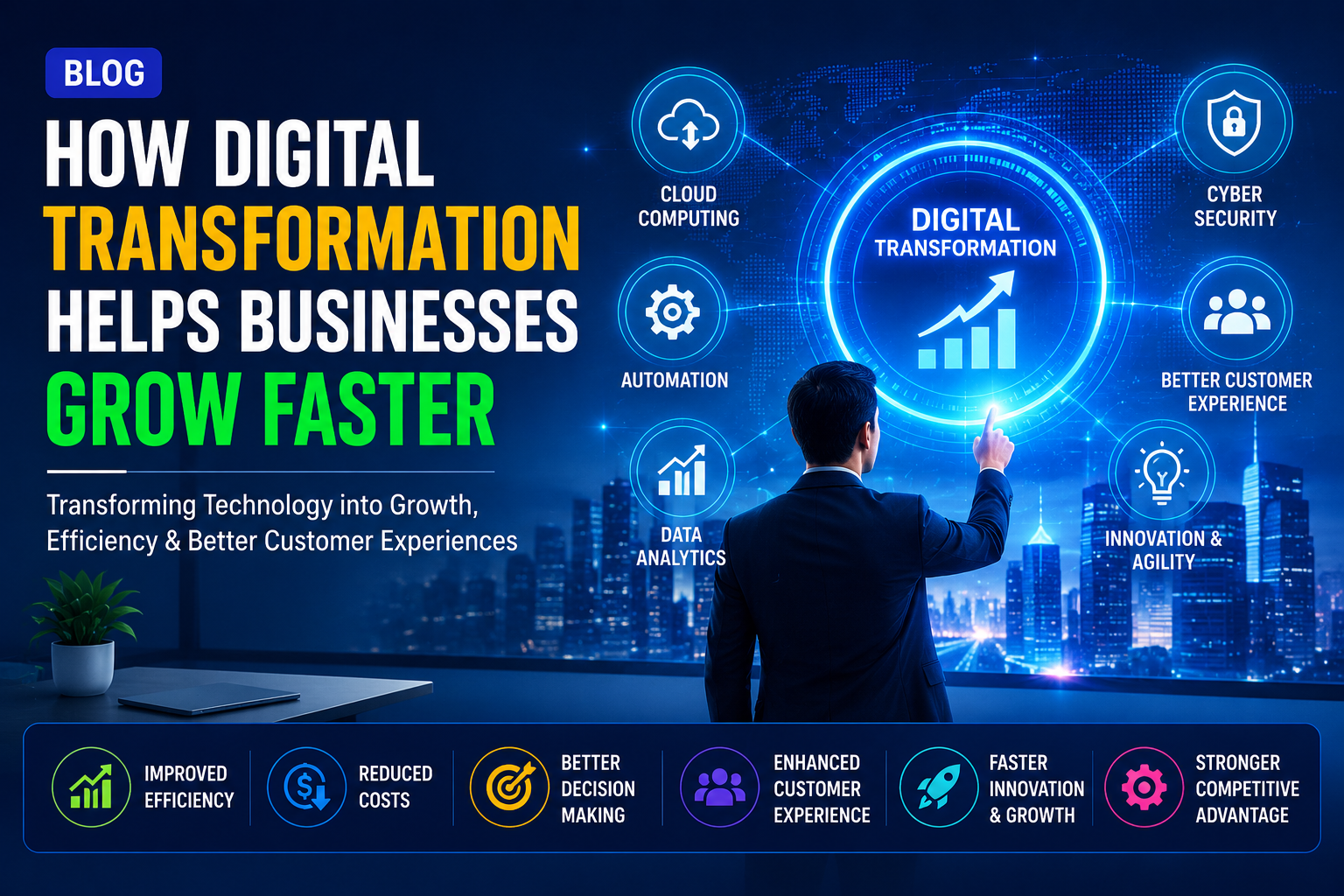
Digital transformation is not just about using modern technology — it is about changing how businesses operate, communicate, and deliver value to customers. From automation and cloud computing to data analytics and digital marketing, technology is helping organizations improve productivity and unlock new growth opportunities.
Companies that embrace digital transformation are better prepared to adapt to market changes, customer expectations, and future innovations. In 2026 and beyond, digital transformation will continue to shape the future of business success.
Improved Operational Efficiency
One of the biggest advantages of digital transformation is improved operational efficiency. Modern digital tools help businesses automate repetitive tasks, reduce manual errors, and optimize workflows. Automation saves time and allows employees to focus on more strategic and productive activities.
Businesses can manage operations more effectively through cloud platforms, project management systems, and integrated software solutions that improve communication and collaboration across departments.
Benefits of Improved Efficiency
- Faster business operations and workflows
- Reduced manual work and operational costs
- Better productivity and team collaboration
Better Customer Experience
Customer expectations continue to evolve, and businesses must provide seamless and personalized experiences to stay competitive. Digital transformation helps organizations improve customer interactions through websites, mobile apps, live chat, customer support systems, and online services.
Modern technologies allow businesses to understand customer behavior, respond quickly to inquiries, and provide convenient digital experiences that improve customer satisfaction and loyalty.
Customer Experience Benefits
- Faster communication and support services
- Personalized customer interactions
- Improved customer satisfaction and retention
Increased Business Flexibility
Digital transformation allows businesses to become more flexible and adaptable in a rapidly changing market. Cloud computing, remote work technologies, and digital collaboration tools make it easier for teams to work efficiently from different locations.
Flexible business systems help organizations respond quickly to new opportunities, customer demands, and industry trends without major operational disruptions.
Advantages of Business Flexibility
- Support for remote and hybrid work environments
- Faster adaptation to market changes
- Improved business continuity and scalability
Data-Driven Decision Making
Modern businesses generate large amounts of data every day. Digital transformation enables organizations to collect, analyze, and use this data to make smarter business decisions.
Data analytics and business intelligence tools provide valuable insights into customer behavior, sales performance, operational efficiency, and market trends. Businesses can use these insights to improve strategies, identify opportunities, and reduce risks.
Data Analytics Benefits
- Better strategic planning and decision-making
- Improved understanding of customer behavior
- Identification of new business opportunities
Enhanced Marketing & Online Presence
Digital transformation plays a major role in improving marketing strategies and online visibility. Businesses can use digital marketing tools such as SEO, social media marketing, email campaigns, and paid advertising to reach their target audience more effectively.
A strong digital presence helps businesses attract more customers, increase engagement, and build stronger brand recognition in competitive markets.
Digital Marketing Benefits
- Increased online visibility and website traffic
- Better customer targeting and engagement
- Higher lead generation and conversions
Improved Collaboration & Communication
Modern digital tools improve communication and collaboration between employees, teams, and clients. Platforms such as cloud-based project management systems, video conferencing, and communication tools help businesses work more efficiently and stay connected in real time.
Effective collaboration leads to better project management, faster decision-making, and improved overall productivity.
Collaboration Benefits
- Real-time communication and teamwork
- Faster project completion and coordination
- Improved workflow management
Stronger Cybersecurity & Data Protection
As businesses become more digital, protecting data and systems becomes increasingly important. Digital transformation encourages companies to adopt modern cybersecurity solutions that protect sensitive information from cyber threats and data breaches.
Businesses can improve security through cloud protection, encrypted systems, multi-factor authentication, and regular monitoring.
Cybersecurity Benefits
- Better protection against cyber threats
- Secure customer and business data
- Reduced risks and system vulnerabilities
Competitive Advantage in the Market
Businesses that adopt digital transformation gain a strong competitive advantage by improving efficiency, innovation, and customer experiences. Modern technologies allow companies to operate faster, provide better services, and respond quickly to market trends.
Organizations that delay digital transformation often struggle to compete with businesses that have already modernized their operations and digital platforms.
Competitive Advantages
- Stronger market presence and brand value
- Faster innovation and business growth
- Better customer engagement and retention
Future Growth & Scalability
Digital transformation prepares businesses for future growth by creating scalable systems and flexible infrastructure. Businesses can easily expand operations, integrate new technologies, and adapt to changing customer demands without major disruptions.
Scalable digital solutions support long-term business sustainability and innovation.
Growth Benefits
- Easy expansion and system upgrades
- Support for future technologies and innovations
- Long-term business sustainability and scalability
Conclusion
Digital transformation has become essential for businesses that want to grow faster, improve efficiency, and remain competitive in the modern digital economy. By adopting advanced technologies, businesses can streamline operations, enhance customer experiences, improve decision-making, and unlock new opportunities for growth.
From automation and cloud computing to digital marketing and cybersecurity, digital transformation provides businesses with the tools needed to succeed in a rapidly evolving world. Companies that invest in digital innovation today will be better prepared to lead, compete, and grow in the future.